If Bitcoin and S&P 500 were the highlights of 2024, gold has taken over the market, and it’s anything but boring. After a strong 2025, when gold gained 64%, the market entered a period of high volatility, with the rare-earth sector experiencing significant swings.
The market is already used to crypto’s high volatility. Still, for gold, this is a new characteristic, as the asset experiences unfamiliar spikes of up to 10% in a matter of days. Amid geopolitical tensions, shifting monetary policies, and the growth of digital assets, gold’s characteristics are changing.
The recent rebound: What’s happening
Early trading sessions in 2026 have been defined by rapid reversals, with the metal correcting after months of sustained growth. After dropping to $4,700 levels, gold rebounded to approximately $5,082 per ounce with futures climbing even higher. The sharp recovery triggered a sell-off, underscoring the market’s sensitivity to global events.
Gold’s standout performance and new characteristics are directly linked to global events. More importantly, the recent incident involving the U.S. military engagement with an Iranian drone led to increased purchasing. When uncertainty is spread across the media, capital flees to gold.
Additionally, the U.S. Dollar Index has been volatile in 2026 and 2025, leading investors to seek refuge to protect their capital. The Dollar Index fell to a multi-month low, prompting more investors to buy gold at a premium when the dollar weakens.
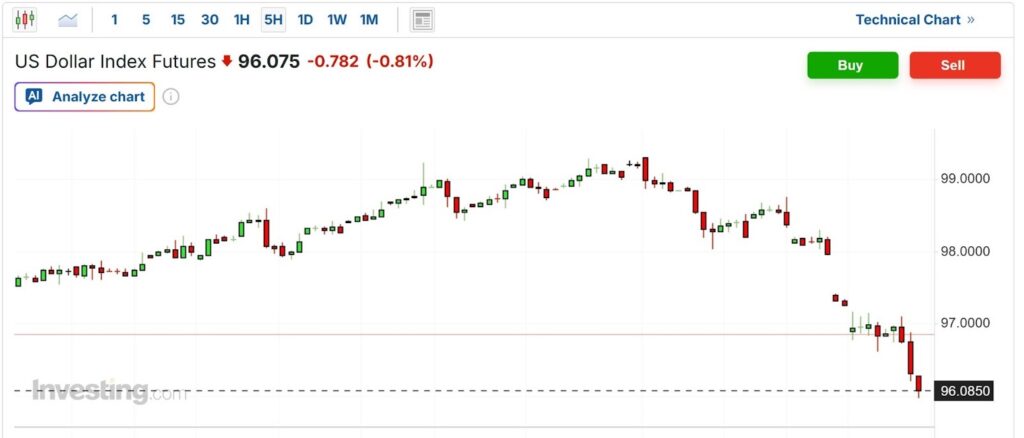
The market is hypersensitive to the Federal Reserve’s next moves. With the nomination of a new Fed chair and debates over interest rate cuts, investors are constantly repricing the opportunity cost of holding non-yielding assets, such as gold.
Is there a positive outlook for gold
Even with the current chop, which is atypical for the precious metal, major financial institutions still price gold at a higher premium. Amid uncertainty in the U.S. financial markets, tariffs, and increased geopolitical tensions, volatility is seen as a consolidation before a larger upward trend in 2026.
Analysts point to the structural support underlying the market. 2025 was a record-breaking year, and the fundamental drivers—specifically debt concerns and central bank buying—haven’t vanished.
Major banks such as Goldman Sachs and Deutsche Bank have set targets of $5,400 to $6,000 per ounce for late 2026.
Where gold goes from here
Gold was always a hedge against inflation and chaos. The way commodities, including silver, have reacted in recent months underscores their role as safe havens in the global financial system.
Banks and other financial systems are reinforcing gold’s status. They are accumulating bullions at a historic pace to diversify their holdings. Interestingly, as the U.S. sought to weaken the dollar and boost domestic production, countries like China and Poland have been increasing their gold holdings.
Scarcity drives prices higher, and as global supply shrinks amid banks and governments withdrawing from the market, gold could continue its trajectory in 2026.
The consensus is that gold will remain a “safe-haven,” and with increased global uncertainty, demand will continue to grow. However, it’s worth noting that the price decrease, which is atypical for the metal, could reflect profit-taking by investors rather than a price reaction to global events.
The Tether factor: Bridging crypto and gold
Perhaps the most fascinating development for crypto investors is the role of Tether. Best known for its USDT stablecoin, Tether has quietly become a titan in traditional finance.
Tether has diversified its massive reserves into hard assets. Reports indicate that Tether now holds approximately 116 tonnes of gold, ranking it higher than many sovereign nations. Furthermore, Tether holds over $100 billion in U.S. Treasuries.
This is significant for two reasons. It proves that major crypto entities view gold as a critical reserve asset for stability. Tether’s massive buying power acts as a bridge, channeling liquidity from the crypto ecosystem directly into the physical gold and Treasury markets.
Key takeaways for investors
With geopolitical uncertainty remaining high, gold is expected to continue outperforming the market in 2026, potentially delivering gains similar to those seen in 2025. For investors, gold serves as a measure of global stress, and any price declines are likely to indicate consolidation rather than a bear market, according to analysts. Investors looking to understand gold’s price movements should monitor geopolitical shifts and assess their impact on market trends.