


In cryptocurrency trading, retail traders often confuse spot trading with derivatives. Spot trading involves buying and selling cryptocurrencies with full ownership, whereas derivatives use financial contracts based on an asset's price without direct ownership.
Both mechanisms are used by traders, but without proper knowledge, retail investors risk making costly portfolio errors.
What is spot trading in crypto
Spot trading in crypto is when a person purchases a digital asset with immediate ownership transfer. When someone buys spot, they purchase a specific amount of crypto. For example, a person can buy 1 ETH at the current market price and they will own that asset outright. They can store it, transfer it or even exchange it if they wish.
The main characteristic of spot buying is asset ownership. Once transactions are completed, assets are transferred to a digital crypto wallet. It also allows traders to retain control over their investment and their digital assets as it provides a transparent outlook on the asset price.
What is derivatives trading in crypto
Derivatives trading in crypto differs from spot in the way they are traded. A trader doesn't buy the asset outright; they are buying and selling contracts whose value is determined by the asset's price at a set date.
Some derivatives require traders to buy back or sell the contract—in profit or at a loss depending on the price of the asset. What this means is that you don't own the actual digital asset. In our experience, contracts are native to the platform they are purchased from, so a derivatives contract is an agreement to speculate on future price movements.
From our own experience, these financial instruments are directed to active traders that can open long and short positions in crypto. The most common types of instruments include options and perpetual futures.
How spot and derivatives differ in trading
The difference between the two is in asset ownership. Spot trading means traders have direct ownership of the crypto asset they are buying. In derivatives, which are common in trading algorithms, the trader only holds the contract representing the asset's value. For context, in futures for example, contracts need to be sold or you must continue paying for borrowing costs to keep the margin.
Leverage is common in financial instruments. It creates an operational gap between the two market types, where spot buying requires people to have their own capital to buy. When buying contracts to speculate, traders can borrow with leverage but have a higher risk compared to spot buying. It magnifies both profits and potential losses exponentially.
Market direction also dictates how these strategies perform. Spot traders only generate a profit when the value of the cryptocurrency increases over time. Derivatives traders can deploy sophisticated strategies to generate positive returns in both rising and falling markets, making it a preferred tool for managing risk during periods of high volatility.
Is there a difference in volume between spot and derivatives markets
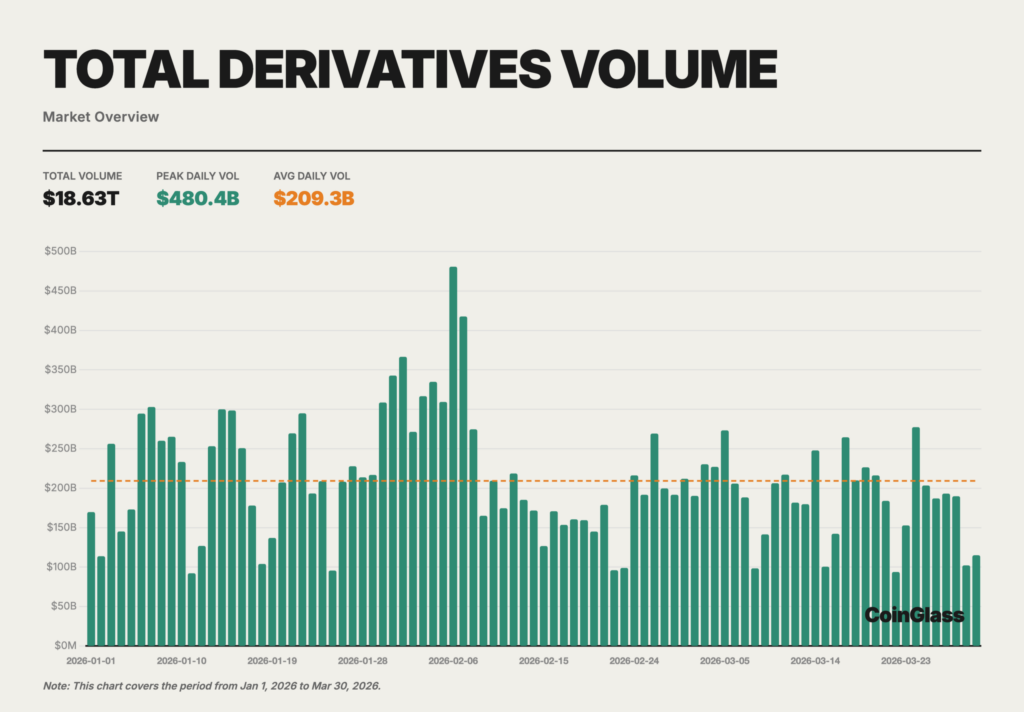
There is a big difference in volume between spot and derivatives. Derivatives process more volume as they provide bigger upside for investors. There have been $85.7T of derivatives in 2025 vs ~ $18.6T in spot. The gap is primarily driven by leverage, perpetual futures, and institutional hedging.
The result is that derivatives activity tends to dominate short-term liquidity and intraday price swings, even though spot volume remains the more direct indicator of real capital inflows into the market and long-term demand for an asset in crypto.
Since crypto positions have higher leverage, derivatives markets inflate trading volume metrics. Data shows that spot volume is only 20-25% of the total combined exchange volume in 2025. Data also shows that in Q1 of 2026, the ratio between derivatives to spot volume is 9.6:1
How is ownership when using spot compared to futures markets
Spot trading transfers absolute ownership of the digital asset directly to the buyer. When your spot order executes, the cryptocurrency is deposited into your exchange account or private wallet, giving you complete custodial control.
Futures markets grant zero ownership of the underlying asset at any point during the trade. You are simply holding a standardized contract that settles in fiat currency or stablecoins based on price movements. You cannot withdraw a Bitcoin futures contract to a private hardware wallet or use it to pay for goods.
This lack of ownership in futures trading removes the technical burdens of asset custody. Investors do not need to worry about securing private keys or navigating complex blockchain transfers. However, it also means you forfeit the ability to earn passive income through native network staking.
When do derivatives make sense and who are they for
Derivatives are financial instruments intended for experienced investors. When retail starts using them, they are always priced out of the market, with over 90% of new traders losing money in the first year of trading. Futures allow traders to protect long-term spot holdings by hedging and opening short positions during anticipated market downturns.
This market is built for professionals who possess strong risk management skills and an understanding of market mechanics. Quantitative trading firms often rely on derivatives to execute complex arbitrage strategies and generate consistent weekly payouts. For retail investors, navigating these instruments requires significant time, technical knowledge, and emotional discipline.
Investors looking for returns from crypto and who don't want to learn how to trade or risk capital with leverage trading, can turn to experienced investment funds. Companies like Yieldfund use quantitative trading strategies to generate market returns by trading the top 10 cryptocurrencies on the market and pay out weekly interest.
Final takeaways
Mastering the difference between spot and derivatives trading is vital for successfully navigating the 2026 crypto market. Spot trading offers the security of direct asset ownership and is best suited for long-term wealth accumulation. Derivatives trading provides the flexibility to profit in any market condition through leverage, though it requires strict risk management to prevent significant losses.
Before allocating capital, assess your risk tolerance and investment timeline. If you prefer direct control and simplicity, focus on accumulating spot assets. Conversely, if your goal is to maximize returns and actively hedge against volatility, consider the strategic advantages of derivatives.
FAQ
Is spot trading safer than derivatives trading in crypto?
Yes, from our own experience, spot is safer for new traders, but they are different ways of trading the crypto market. Spot is outright ownership, while derivatives can lead to liquidations.
Can you lose money with derivatives trading?
Yes, you can lose your entire initial investment rapidly with derivatives trading. If you use leverage and the market moves against your position, the exchange will liquidate your account to cover the borrowed funds.
What's the difference between perpetual futures and spot trading?
Perpetual futures track the price of an asset using funding rates, while spot trading is the direct purchase of the asset itself.