


Global geopolitical conflicts and rising energy costs are pushing EU countries to take strict measures that impact spending power. With that, the Netherlands offers a critical look at these challenges, pushing De Nederlandsche Bank (DNB) to issue a "code orange" warning for the Dutch economy, highlighting a difficult path forward.
With growing market uncertainty and unbudgeted spending, the biggest threat looming in the region is stagflation, characterized by stagnant economic growth and high inflation.
Let's unpack the Dutch central bank's recent forecasts to better understand how they see the outlook over the coming months and how investors can adapt to any market changes.
De Nederlandsche Bank's forecasts and warnings
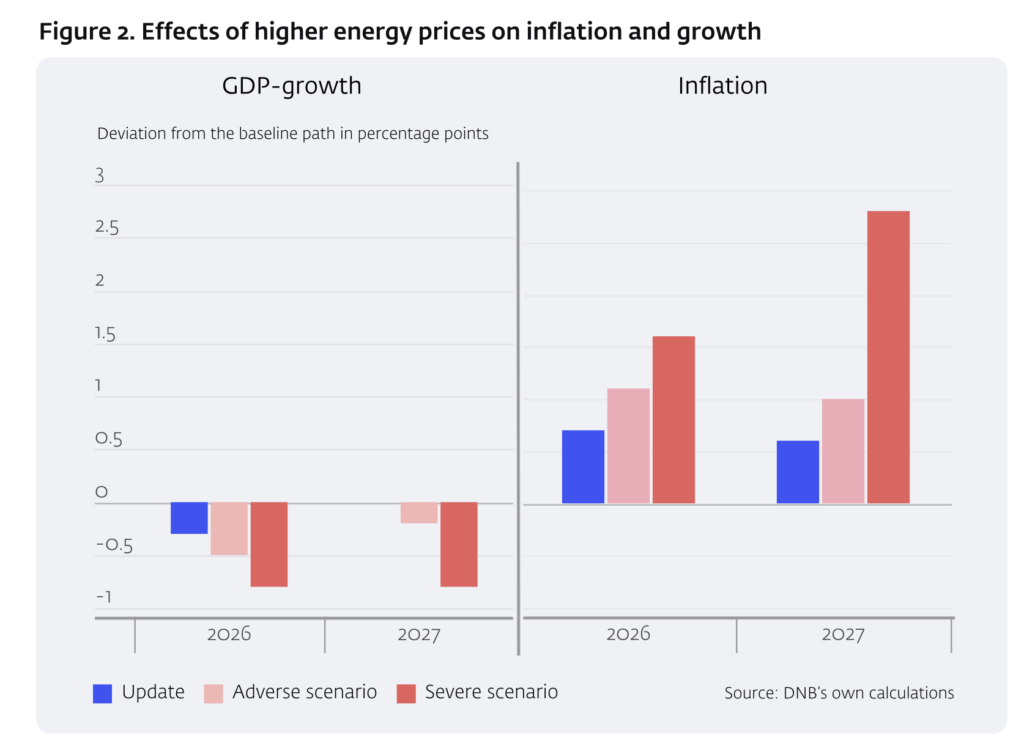
The DNB provides a clear picture of the challenges facing the domestic economy. The ongoing conflict in the Middle East threatens to disrupt global supply chains. Even more importantly, it is already impacting the global oil trade. DNB is calculating that inflation could rise by at least 0.5%.
The concern is that projections are dynamic and depend on how geopolitical situations are developing. A worst-case scenario is a 1.6% higher inflation and an additional 2.8% in the coming year, all while economic growth drops by 0.8%.
If inflation increases and economic growth remains below the threshold, it simply means the economy is stagnating.
While these figures are concerning, DNB president Olaf Sleijpen notes that the impact will likely be less severe than the 2022 energy crisis triggered by the Russian invasion of Ukraine.
During that period, gas prices surged past €300 per megawatt-hour. Currently, prices are fluctuating between €50 and €60. Although this provides countries with a buffer to adapt and take measures, the blockade of the Strait of Hormuz continues to put upward pressure on the oil and gas industry.
During periods of high inflation, governments often face pressure to subsidize consumer costs. Sleijpen considers it "wise" that the Dutch Cabinet is waiting to see the actual effects on households before issuing widespread financial compensation.
Dutch economy pressure points
Energy costs remain the most volatile component in how the Netherlands is assessing its inflation forecast. The disruptions in the Strait of Hormuz directly affect global oil supplies, with 20% of oil cut off from global trade. For a trade-dependent country like the Netherlands, high energy prices raise production costs, reducing total purchasing power.
Even though the Dutch economy grew by 1.7% percent in 2025, much of this was due to companies front-loading their international trade in anticipation of new US tariffs. With those tariffs now a reality, DNB expects growth to slow to 1.2 percent in 2026 and 1.1 percent in 2027.
Stagflation does not impact everyone equally. DNB emphasizes that stagflation is unequally distributed across the economy. It's estimated that a quarter of households in the lowest income bracket will spend more than 10 percent of their disposable income on energy in 2026.
The call for European cooperation and government relief
Stagflation and economic concerns require more than national politics to be effective at the EU level. The Dutch central bank is emphasizing that EU-level policies can have a bigger economic impact.
DNB urges the government to reinforce European economic cooperation. Maintaining a strong, rules-based European internal market makes the domestic economy less dependent on any single region and more resilient against global trade wars. However, the Netherlands is strongly opposed to subsidizing energy consumption and should prioritize addressing structural bottlenecks rather than subsidies, which can affect inflation in the long run.
Thus, the overloaded electricity grid, uncertain regulatory policies, and an aging population require solutions at a national level. By resolving these domestic issues, the government can encourage business investment and stimulate growth.
Navigating economic uncertainties
The convergence of rising inflation and stagnant growth due to geopolitical conflicts and disruptions in the supply chain is creating a stagnation scenario for the Netherlands. Higher energy prices are putting pressure on consumers, reducing their purchasing power.
Thus, investors holding assets in traditional banking structures with minimum interest are at a disadvantage. If inflation increases, bank deposits will not match inflation numbers. Alternative approaches should be considered, and Yieldfund can help diversify a portfolio while still accessing high yields. As a quantitative trading company, Yieldfund provides up to 48% yearly returns and weekly payments. It's one way to adapt investments to overcome macroeconomic volatility.